
Another primary election season is upon us!
Congresswoman Nydia Velรกzquezโs announcement last year that she would not seek reelection set off a scramble for power as a handful of challengers look to replace her in New Yorkโs 7th congressional district.
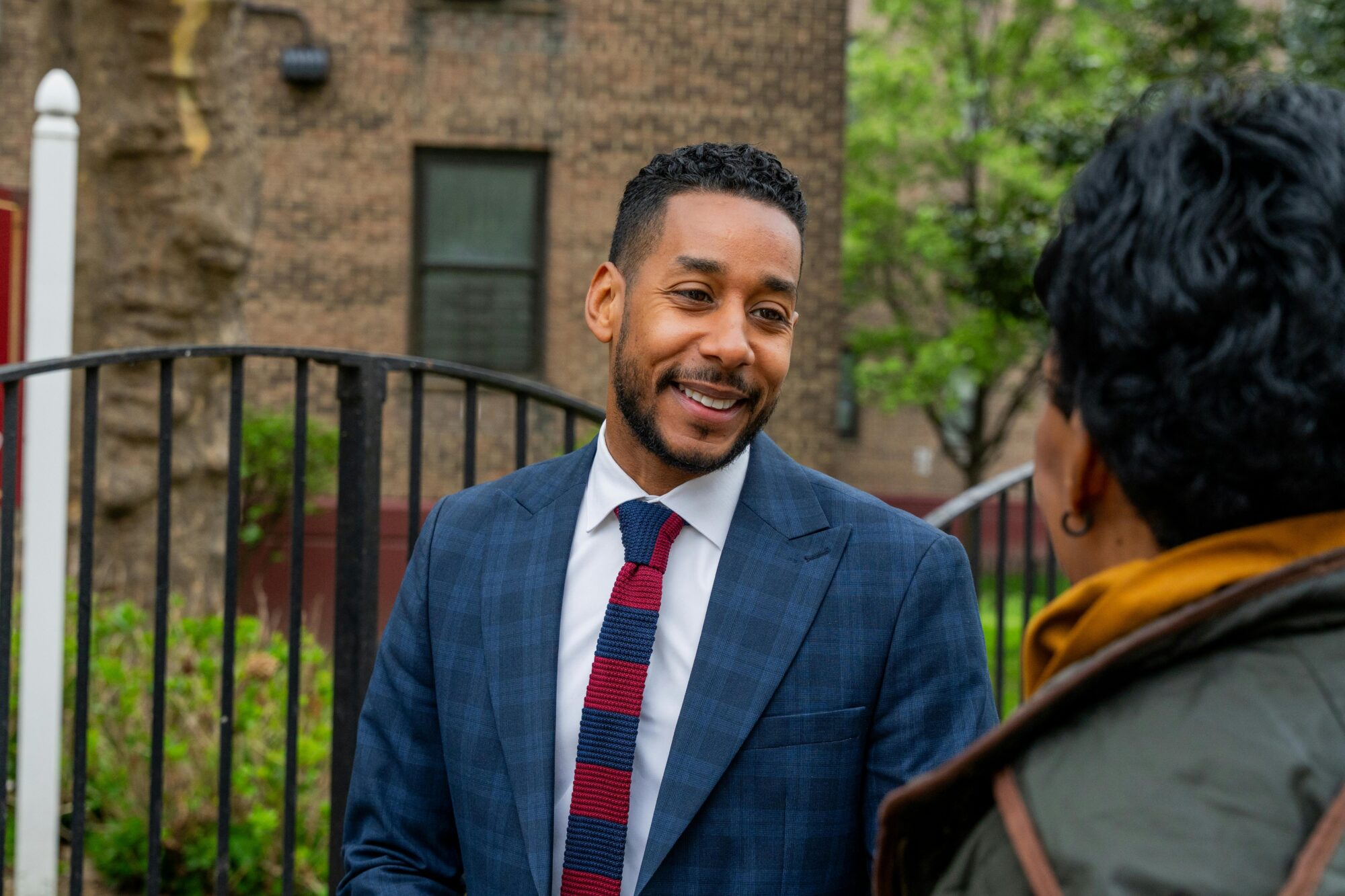
Weโre interviewing four of those contendersโVichal Kumar, Antonio Reynoso, Claire Valdez, and Julie Won. All four are running as progressive candidates. We recently spoke to current Brooklyn Borough President Antonio Reynoso, whom Velรกzquez has endorsed.
Read our previous interview, with Vichal Kumar, a public defender.
As a reminder, Greenpointers does not take money for political ads from any candidate, ensuring our independent coverage.
The primary election is June 23.
This interview has been lightly edited for clarity.
Tell us about you, and your relationship to this district
I was born in Cumberland Hospital, but raised in the Southside of Williamsburg. My parents came here from the Dominican Republic, so we were extremely poor. I always talk about the story where we were on food stamps, Section 8, and welfare. And my parents didn’t have it easy, but the government really showed up for us. And it’s why I’ve been working to pay it forward for quite some time now.
But the Southside has raised me. I went to Nuestros Niรฑos, the local daycare center, to PS 19, which is now the Arbor School. I went to MS 50 and Transfiguration Church; this neighborhood raised me in every way, shape and form. I went to college, obviously came back and started working for Acorn where I was organizing childcare providers to be a part of the UFT, because they were looked at as glorified babysitters, and we saw them as early childhood educators. So that’s how I started organizing after college.
I then started an organization called New Kings Democrats, which is a Democratic club that was fighting against the party of the moment. Then I worked for Diana Reyna, ran for City Council, passed very difficult pieces of legislation that were worth it. Maybe not politically popular at the time, but were absolutely essential items to moving the progressive movement in the direction that I thought it should go, like the Right to Know Act, Stand for Tenant Safety, outdoor dining. Those are all important things we were doing.
I got elected to Borough President. I’m the youngest elected to a four year term in its entire history, the first Latino, the first Dominican city wide. But what I wanted to do is not have a performative job, something that is just about the fluff. We have a maternal health agenda for black women in Brooklyn, where we gave $45 million to the three public hospitals to make it so that we’re the safest place for all women to have babies, in all of the country is what we’re really hoping to do. We were able to get 6,000 migrants workforce authorization in our office. Instead of throwing parties, we got people jobs. And that’s the type of work that I want to continue to do as I move to Congress.
You obviously have a long track record of public service, but what are some of your more recent proudest accomplishments on the job?
The migrant crisis in New York City was a big deal. And it was hard to figure out a way to really be helpful. You know, I remember offering the OEM [Office of Emergency Management] commissioner at that time, Zach Iscol, that I wanted Borough Hall to be a site to take on migrants when we couldn’t find sites for it. And he said we couldn’t do that. So we ended up converting the community room, where we used to throw parties, into a work authorization/legal services. We were able to get 6,000 people to fill out that form. And if they get jobs, those are people that are no longer in shelters. They’re no longer in cots and tents. So it was something that I thought was really meaningful that we were able to do.
And then just our housing work. We’ve really been stressing and focusing over the last four and a half years, just building more in Brooklyn and really having a conversation about equity and how we do that. We believe we have opportunity areas in Brooklyn where people should live. Park Slope and Carroll Gardens are amazing places with great parks, great schools, have great jobs, great roads, great transportation. Those are the places where people should be building families. So we really want to talk about starting the process of developing and growing and building more housing, specifically in places where we think that families would thrive in.
Those are two accomplishments, just really being the pro-housing borough president and also just knowing when there’s crisis, knowing how to show up and actually affect the meaningful change, not just being a talking head that’s going to make noise and push back against the mayor, but somebody that knows how to help and show up for the borough of Brooklyn, but for our community every single time.

One of the more hot button issues lately in Greenpoint and Williamsburg has been the Monitor Point project. As Borough President, you voted to approve the project, albeit with conditions. Why did you ultimately lend your support to the project?
I think the project is not exactly where we want it to be just yet; that’s why the conditions are so important. A lot of folks, you know, it’s either yes with conditions or no with conditions, and I was encouraged by the project and think we’re heading in the direction. So I wanted to support it, but I still think that we can get to 50% affordable housing on this site, and we should.
But also, Bushwick Inlet Park was something that was promised to this community so long ago under the Bloomberg administration and also under parts of the De Blasio administration. And we just haven’t seen the commitment come to fruition. So we have these vast spaces that are just empty, concrete, just not producing the green space that is desperately needed in the waterfront. Because even after we build all those parks on the waterfront, we’re still losing park space comparative to how many residents are moving into the new buildings that we’re seeing on the waterfront. So Bushwick Inlet Park is a top priority. We need to be able to finish that.
And we got to leverage these moments when we’re doing rezoning to be able to get to those places. But it doesn’t stop us from wanting to build the housing and fight for as much affordable housing as possible. And it’s definitely 50%. So yes, I am supportive of the project. I’m really encouraged by Lincoln Restler and the negotiating that he’s been doing. And I know he’s going to be able to get the most out of this development for the community.
That project and so many others are in the shadow of the 2005 Greenpoint-Williamsburg waterfront rezoning, which irrevocably changed our neighborhood.
We have three Superfund sites, less open space access per capita than most neighborhoods in New York City, and a still unfinished Bushwick Inlet Park. The power of a congressperson is different than that of a Borough President or City Council member. How would you use this office to advocate for Greenpointโs environmental needs?
I always talk about, if you’re born in North Brooklyn, you are an environmental justice advocate at birth. You have to be. We have high asthma rates. Newtown Creek has been poisoned by ExxonMobil, and the trash politics, in which the shutting down of Fresh Kills made it so that we opened up tons of waste transfer stations in the district. So what we have to do is just stay on top of it and really advocate for it.
So the things that we need to really finish are the Newtown Creek and the Superfund sites, see it to completion and getting that done. Any new development that is happening in the waterfront has to respect the fact that we’re expecting higher water lines in the district. And we don’t want to make it so that the waterfront is inaccessible and something that we won’t be using in 50 years. And then the trash work, I was able to pass legislation to reduce the capacity of trash in the district by 50%. Then with commercial waste zones, I’m also gonna make it so that less trash haulers are running through our districts on an everyday basis or reducing truck miles traveled by one million miles every single year.
I’m talking about the things we still need to do in Congress, but also the work that I’ve already done as an environmental justice advocate to really close the gap on a lot of these issues that we’re seeing in the community.
Obviously affordability is really at the forefront of this election and this district, which some have dubbed the โCommie Corridorโ due to its support of progressive politicians. What does your vision of affordability look like for this district?
I think that the foundation of the conversation about affordability is housing. What we need to talk about the federal government is to make it a player in being able to build housing, affordable housing, middle-class housing. We talk about the housing programs of the past, and we have NYCHA, we have Mitchell-Lama housing, we have [Section] 202 senior housing. All programs that no longer exist and were subsidized and supported by the federal government.
We need to be a federal government that can see the crisis of the moment, which is the affordability crisis of housing, and be a player and a partner with our city and state allies. And we’re not that. Our hands are tied behind our back, and we’re allowing for city and states to try to fight their way out of this crisis, completely independent. So I want to repeal the Faircloth Amendment so that we could support the development of new NYCHA housingโwhich a lot of people are just calling social housing, but we already had that, and it’s called NYCHA. Things like Mitchell-Lama, which is affordable homeownership that can help rebuild the middle class, and these young people that feel that they can never achieve their American dream, get a shot at affordable homeownership through programs like the Mitchell-Lama. And then we have this growing aging population in the district and throughout this entire country, and we don’t do senior housing at the federal level anymore. So in all those cases, where we should be front and center in supporting cities and states and building their way out of this crisis, we’re not there, and I want to be a player or a congressperson that fights for those programs to exist and to start solving for them.
Over the past few years, weโve seen so many small business closures. How can we better help small businesses?
Two things here. The first thing is that we’re going to see a lot of people in this race talk about things they want to do to support small businesses. I was the lead sponsor of outdoor dining during COVID. And outdoor dining expanded usable square footage for a business outdoors and made it so that we saved over a hundred thousand jobs. And that’s like a conservative estimate of the jobs we saved.
Because when crisis came, I had a solution, and we were able to implement it. It’s the type of leadership that we need. Not just people that talk about small businesses being the backbone of this country, but never really being able to show what they’ve done for small businesses. I have a proven track record of supporting small businesses and actual legislation that I passed and numbers behind how valuable the legislation was. That’s the first thing.
What is a local business closure that really bummed you out, and whatโs a new opening in the district that has you excited?
We have a bodega on South 4th and Hewes Street that closed down that had been there since I was a young boy, so at least 35 years. And it shut down and a coffee shop opened up. But the coffee shop is owned by Puerto Ricans that are from the community. And they’re called Nyla Cafe (362 Hewes St.) now. And for me, it’s not fun to see the bodegas close, but to know that another business came up and opened there that was still Latino owned, from the community, really brought me a bit of joy. So it was bittersweet to see one go down, but the one coming up is representative of the community, and it’s something that can show the promise of working together, integrating, and giving people opportunities.
And then the federal government, how they could be supportiveโaccess to capital is always the biggest issue for small businesses. And we just don’t have enough. The SBA loans and SBA support is very limited to non-existent for a lot of these businesses. And we should be expanding that a lot more. Congresswoman Nydia Velazquez was one of the greatest advocates we had in the Small Business Committee, both as a chair and a senior ranking member. And she did a lot of work for COVID and making sure that we got access to loans. But outside of crisis and COVID, we should be talking about how we can assist businesses with extremely low interest loans or grants. So really activating SBA would be something that I would be looking forward to.
Anything else you want readers to know?
I believe in the advocacy and activism work that needs to happen at the federal level, so we can start pushing the agenda towards a more progressive vision. But I’m also the person that has actually done the work. I have legislation that you can read through. I have receipts. I have a record that you could read through and see the tough things that I did. I want to be able to go to Congress, not just to make noise, I want to go there to affect meaningful change in people’s lives, and I believe I’m the one best prepared to do that. I’m looking forward to being the representative of the Democratic Party come June 23.
