

Update Feb 26, 2026: This article has been updated to clarify that Uri Scheft is no longer involved with Breads Bakery.
Williamsburg Wharf, a new development with addresses between 460 and 490 Kent Avenue near South 11th Street, is comprised of five new residential buildings and space for various retail and dining options.
The project is years from total completion, but the first phase of leasing has already begun.
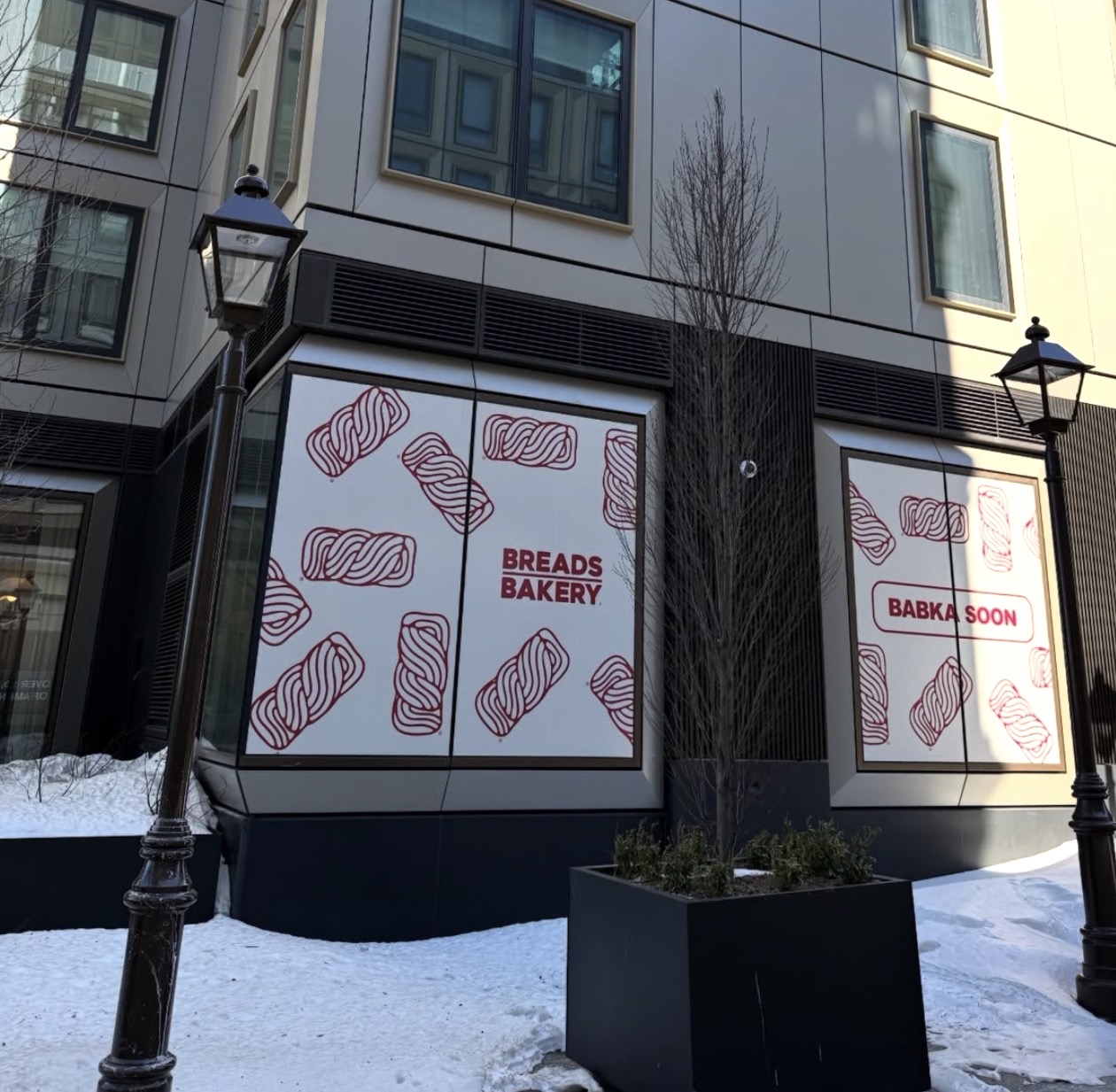
So far, two eateries, Naked Tomato and Breads Bakery, have put up signage in the development, signaling that they may be the first restaurant tenants to open.
According to New York YIMBY, Breads Bakery is slated to open later this year. No opening date has been published for Naked Tomato, but its signage says “coming soon.”

Naked Tomato is an Israeli concept from Chef Eyal Shani, who founded popular Manhattan spots like Port Sa’id and Miznon. Chef Shani first opened Naked Tomato in Manhattan’s Hudson Yards, but that location has since closed.
Naked Tomato’s menu in Hudson Yards focused on chicken, beef and lamb skewers, as well as several complimentary small plates, including items like roasted bell peppers, melting chickpeas, octopus salad, and pickles.

Breads Bakery first opened in Manhattan’s Union Square in 2013 and now has several Manhattan outposts and one in Brooklyn Bridge Park. It was founded by Uri Scheft, a Jewish baker with roots in Israel and Denmark, although he has not been involved in more than a decade; it is currently owned by Gadi Peleg.
Breads Bakery is the winner of both the best baguette and best croissant in New York and is known for its cult favorite babka. The cafes also have salads, sandwiches, pastries, and a variety of breads.
Eater reported that Breads Bakery’s new location at Williamsburg Wharf will be 4,700-square-feet and have an open kitchen, plus exclusive items made just for Brooklyn.
However, the bakery has not been without controversy, as its workers recently moved to unionize earlier this year. In an Instagram post from earlier this year, the Breaking Breads Union cited the need for a living wage, overtime and holiday pay, reparing broken equipment, and called for an end to “use of bakery profit to materially support the Israeli occupation.”
A worker told Brooklyn Paper in January that “workers have faced what she described as union-busting tactics, including anti-union meetings and the distribution of misleading information.”
Additional reporting by Emma Davey