

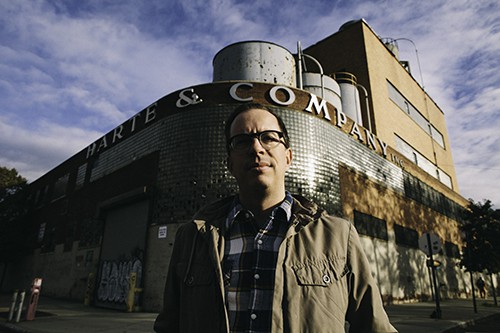
The other day I sat down with my friend, fellow Greenpointer, and hardcore environmental justice advocate, Mike Schade, to get the skinny on Nuhart Plastics–one of the most toxic sites in the hood–which recently got sold to a developer with plans to convert the festering Superfund site into fancy condos.
When it comes to converting a Superfund site into residential development, gentrification should be the least just one of our…
“When it comes to converting a Superfund site into residential development, gentrification should be the least of our concerns.”
Wait, what? No, this is kind of ridiculous. These things are directly connected in that the latter is the determining context for the former. The danger that the property will be irresponsibly developed is an very immediate result of gentrification. The developer strives to accelerate the process with those “deep pockets” in order to extract profit from toxic land that ONLY has such value because of gentrification.
Otherwise, thanks! This is a very helpful summary of the problems with this Greenpoint location.
Yes, you are absolutely true–there is a cause and effect situation here–although I meant people should be more concerned about public health over displacement for this particular project. Despite gentrification, this property would still be cleaned up whether that would be in 5 years or 50 years. The Superfund has no funds these days so having a deep-pocketed developer is a double-edged sword. Personally, I wish it could all disappear without a trace!
Thank you for this update! I called a few years back about the proposed clean up and was given the run around by the DEP who couldn’t confirm who was in charge of it. It’s disturbing that they provided funds and renovated the park across the street. I would never take my kids there as there is danger lurking beneath. Now all my thoughts are totally confirmed!
“When it comes to converting a Superfund site into residential development, gentrification should be the least of our concerns.”
Just to clarify – I never said that, and did not mean to imply that, if that’s what you took from the interview. I totally agree with your concern.
On this point, I said —
“Well it’s hard to say given that the developer has said little to nothing publicly. I’m not sure an empty warehouse with 60,000 gallons of poisonous chemicals underneath it serves the community so well, even if I think the building is quite beautiful. Hopefully any redevelopment could preserve it, especially the round corner/front. On the other hand, I don’t think more giant condos that only lead to further gentrification serves our community either.
It’s an interesting situation–where the possible redevelopment could lead to a much cleaner site, but at what cost to the rest of the neighborhood? Unfortunately, there’s not much that can be done to prevent more condos from being built there, but we can make sure that the site is cleaned up comprehensively which would be a win for the environmental health of the neighborhood.”
Good info!
I live on Dupont street and I never would have moved here if I had been aware of this. Now I am frightened. There is a small construction site adjacent to this property that is being developed right now. When the lot was dug into this summer both my boyfriend and I felt very ill. I wonder now if contamination was stirred up from digging next door to the nuhart plant. I also wonder how much exposure the residents of the block have received from the toxic plume and the current effort to siphon the phthalates. If a resident develops sarcoma or bladder cancer or a neurological disorder as a result of this exposure, who is responsible? I feel very sad that this is going on and people continue to move to Dupont and Clay streets unaware of the situation.