
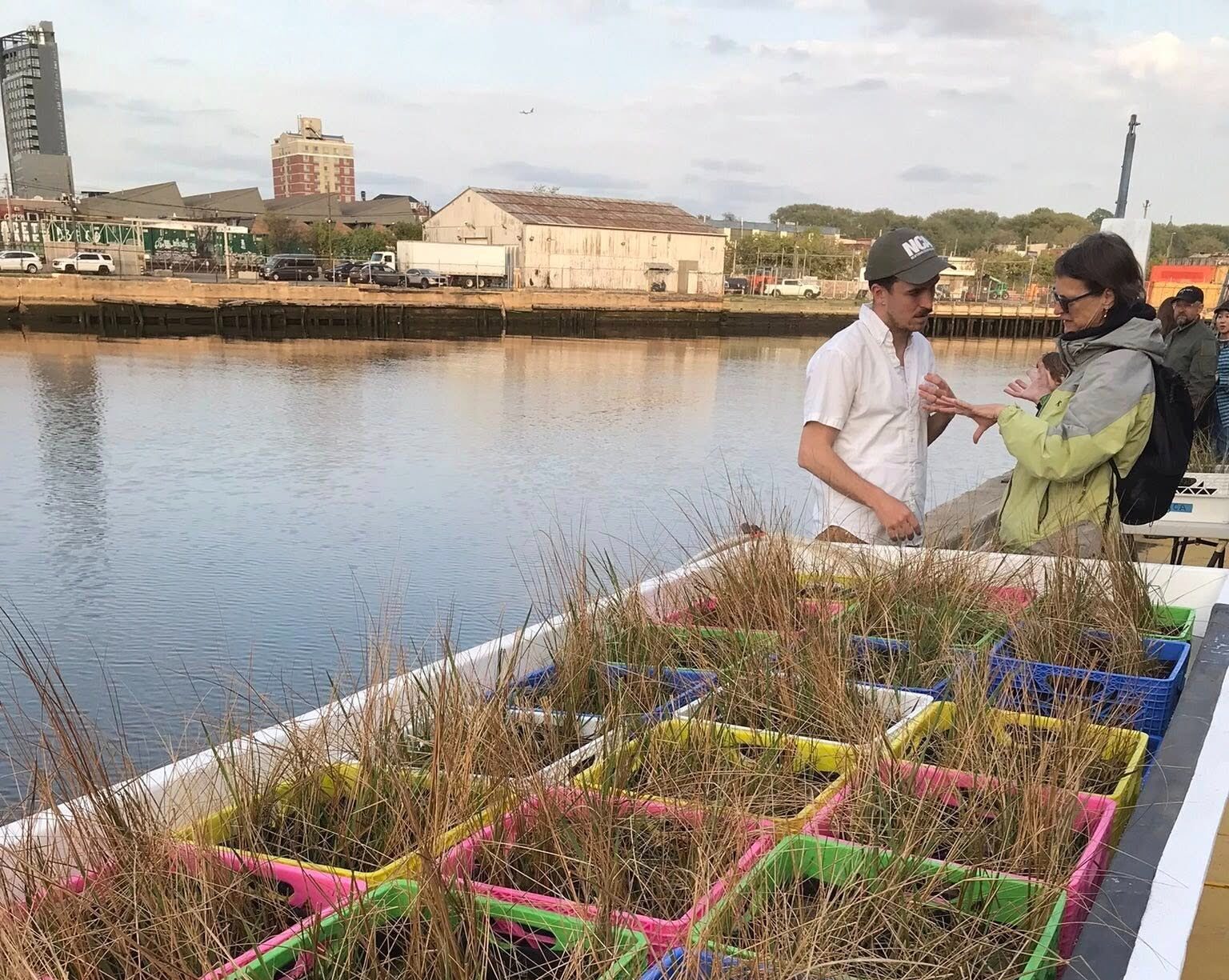

There’s a new “neighbor” in Greenpoint: TINA, an aquaculture tank, set up beside the Newtown Creek and right next to Kingsland Wildflowers (520 Kingsland Ave.). For six months, TINA will be helping to clean the creek’s water; and it’s worth a visit to see how this important work is getting done.
TINA is a brainchild of the Newtown Creek Alliance and began operating last month, on Earth Day. The tank draws water from the creek with a pump, then runs the water through saltmarsh cordgrass (Latin name Spartina alterniflora; thus the project name TINA) and hundreds of Atlantic ribbed mussels. The mussels and grass, both of which used to be plentiful within the creek’s ecosystem, help clean and filter the water.
Twice daily, TINA fills with new creek water, passes it through the grass/mussel system, and releases it back into the creek. Water-quality samples are being taken throughout the duration of the project to see how this is working. By the end of the six-month trial, TINA will have filtered hundreds of thousands of gallons of water.
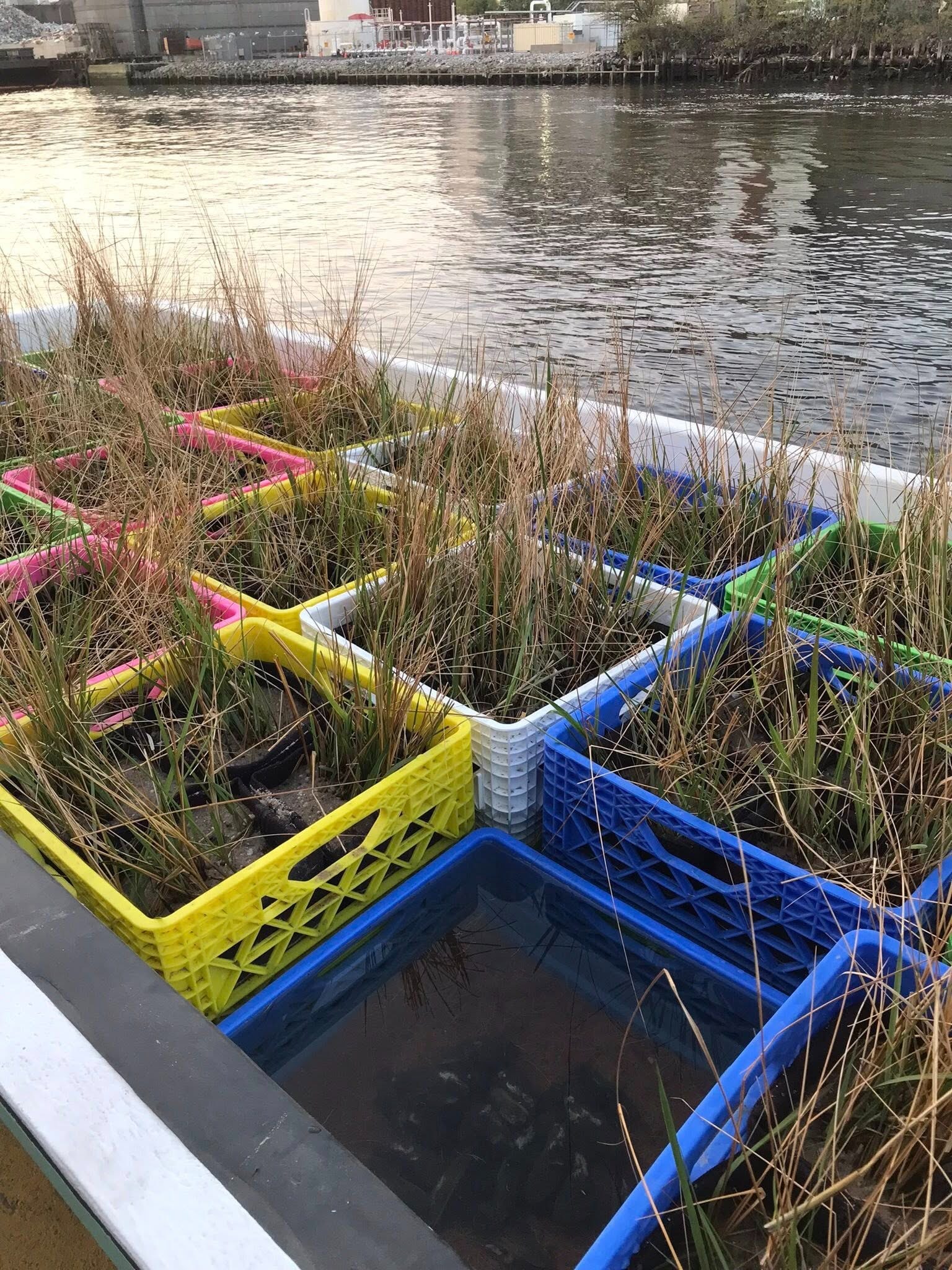
“Last year we had a few thousand plugs of marsh grass and a large tank of mussels,” explains Gus Perry, NCA’s Restoration and Marine Projects Coordinator, “staged for two separate, concurrent restoration projects. We pitched the idea of TINA, which combines these concepts into one, to ConEdison—since their climate-resilience partnership has funded some of our other intertidal projects. And they liked the concept!” He adds that TINA’s roots can be seen in other fields: “The design is similar to aquaculture tanks used in commercial shellfish operations.”
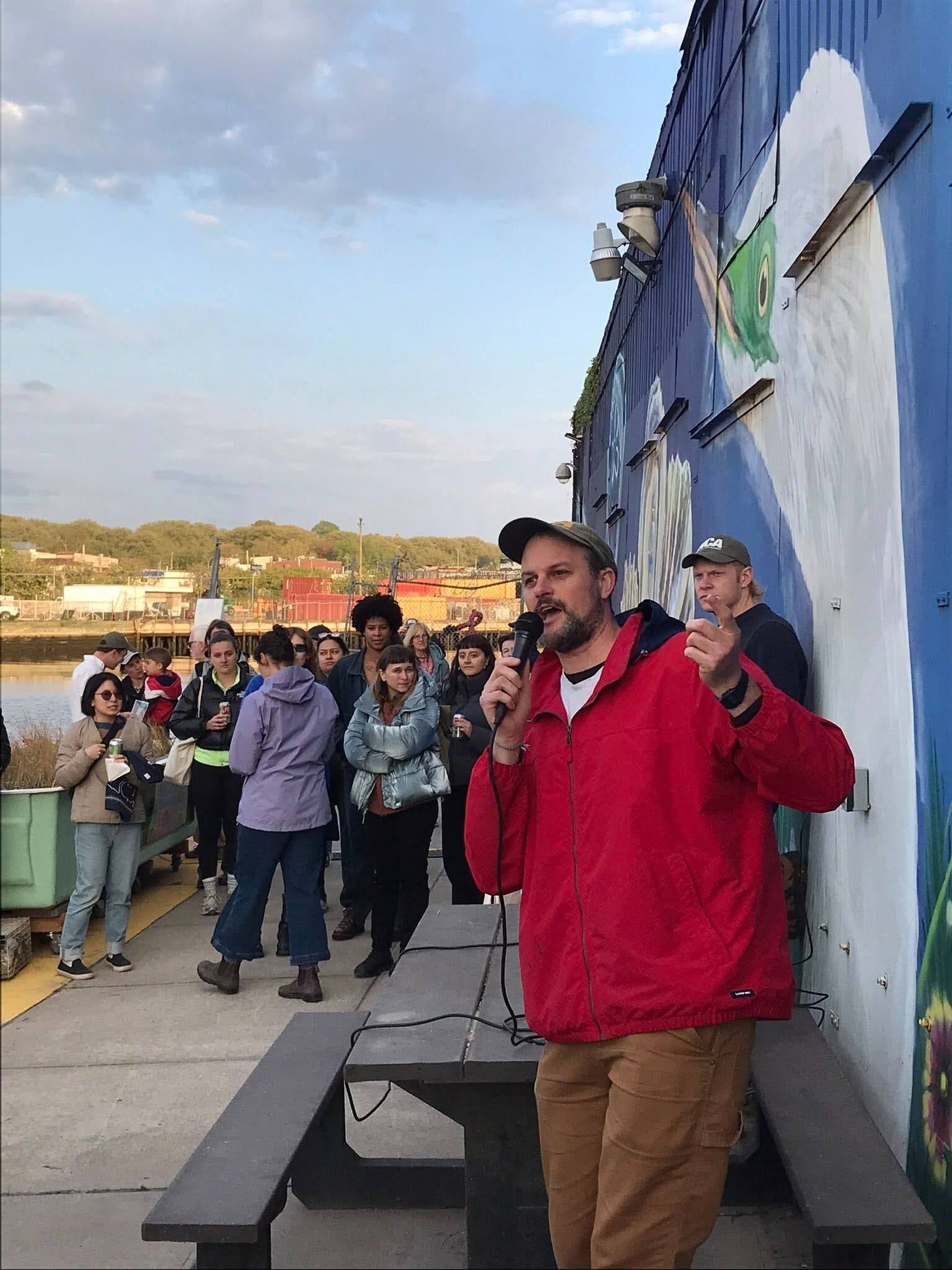
The project’s launch coincides with the start of Friday-evening Open Hours for Kingsland Wildflowers. This is a time to meet TINA, explore the space’s green roofs, and chat with NCA staff. (Some of the Open Hours evenings feature music, as well.) Kingsland Wildflowers and its staff can also be accessed during scheduled public programming; or on Monday to Friday by appointment.
Though TINA is working hard, Perry notes that its components should be occurring in the creek naturally. “[The tank is] no replacement for actual shoreline restoration,” he says. NCA and its partners have initiated, and maintain, several projects along these lines; for instance, they constructed two “living docks” in the creek that encourage growth of the native grasses and repopulation of the native marine life. But help is needed.
“We’d love to see more efforts to restore sections of saltmarsh in Newtown Creek and other urban waterways,” Perry reflects. “We hope people can realize the importance of coastal wetland and similar ecosystems.”
Still, TINA represents a novel approach to measurable progress—and to showing what could happen given large quantities of cordgrass and mussels in and around the creek. “We’re getting to show off some creative, nature-based solutions for improving water quality in Newtown Creek,” says Perry. “We’re excited.”