
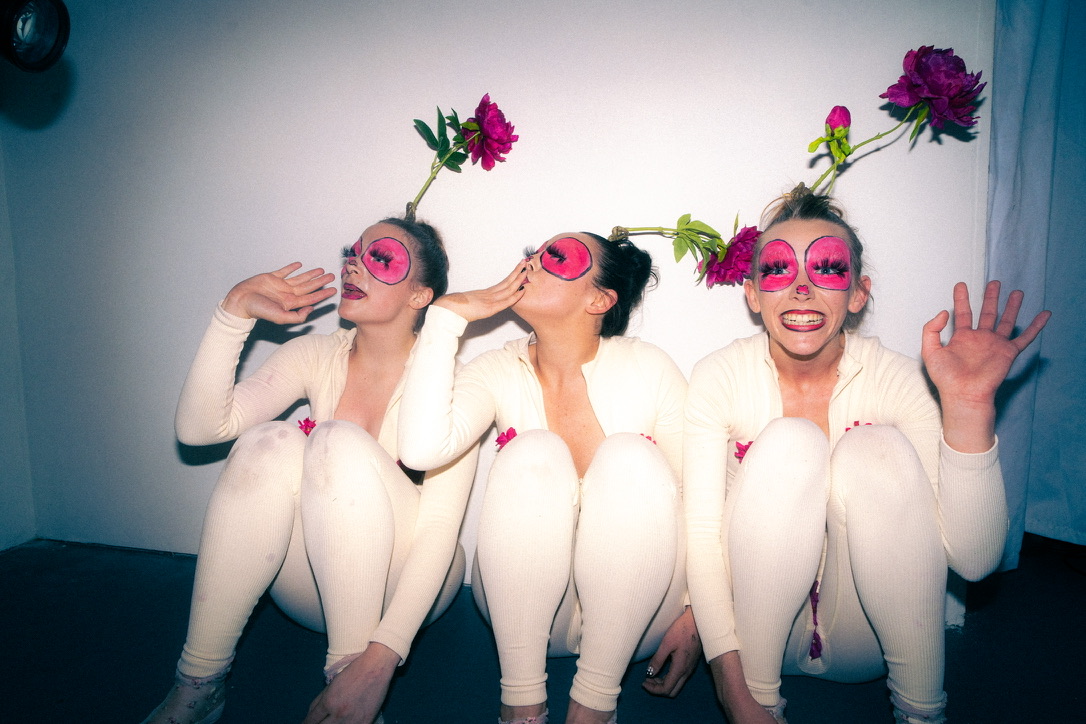
The best art lives on the edge, and that is doubly the case with Growing Takes Time: the piece blends contemporary art forms and is also, literally, on the neighborhoodโs edge.
Performing at Greenpoint gem Kingsland Wildflowers, Noo Arts presents Karley Wasaffโs New York State-funded performance, blending digital media, interactive dance, and site-specific theater. Itโs a ripe combination of thrills that match the venueโs, particularly at this one-night-only performance on June 20: a summer solstice event, the all-ages-welcome performance concludes with a rooftop dance party overlooking the Manhattan skyline. If you need a break to stop grooving, you can literally stop and smell the roses.ย
Below, Wasaff pauses herself to reflect on the journey of bringing the large-scale work to a large-scale setting. Learn more about the unique performance below, see a trailer here, and then grab tickets.
Greenpointers: Hello Karley! This sounds like a fun, immersive, unique dance performance. Can you sum up what audiences can expect when coming to Kingsland Wildflowers?
Karley Wasaff: Growing Takes Time is a real-life video game disguised as a dance performance. Audiences donโt just sit and watch โ they become part of the system. Inspired by games like Pikmin, the performers act as โPIKMIIโ guiding audiences through playful missions, movement prompts, conflict-resolution games, and cooperative challenges. The work blends contemporary dance, immersive theater, and the playful unpredictability of New York Cityโs experimental gallery scene.
At Noo Arts, audiences can expect sunset rooftop views, live gameplay, unexpected interaction, absurd humor, and a strange little world where collective problem-solving becomes choreography.

Noo Arts is such a special gem; what led you to activate that space and stage your piece there?
Noo Arts felt like a natural home for Growing Takes Time because the space already embodies so much of what the work is about: the intersection of art and environment. Their wildflower rooftop garden creates this feeling of stepping into a hidden world above the city, which aligns perfectly with the immersive universe of the piece. Iโve also loved consistently collaborating with Tribe & Vibe Collection and intertwining their Hydroponic Tower Gardens and community-centered mission into the immersive experience. The show already has a legacy of helping activate these community spaces while encouraging more spaces to invest in sustainable growing systems.
This is not the first mounting of Growing Takes Time. Where has it been before, and what led to its creation?
The first version of Growing Takes Time was a tiny 10-minute experiment at Satellite Art Show during a โweird music nightโ with three performers and essentially no budget. I honestly just wanted to test whether audiences would engage with the system mechanics. Since then, the work has grown through solo gallery shows, immersive art spaces, and social platform activations.
The deeper root of the project came from feeling like so many artistic communities โ and honestly people in general โ have become deeply disconnected from themselves and each other. I became interested in how burnouts make collective care feel almost impossible, which then snowballs into larger issues like environmental grief and community paralysis. How are we supposed to help shape change or care for our planet if people donโt even have accessible tools to regulate their nervous systems, gather meaningfully, or reconnect through play and embodiment?

Congrats on the NYSCA grant! Artistic grants are so vital, and also feel so scarce at this time. Can you talk about the importance of this support for your production?
This support completely changed the scale and sustainability of the project. Previous iterations of Growing Takes Time were built almost entirely through community labor, favors, and sheer determination, with me personally carrying a huge amount of the producing. The NYSCA grant didnโt just help fund rehearsals and collaborators โ it helped fund outreach, infrastructure, and the ability for me to actually care for myself while building the work.ย
A major part of my long-term vision is creating funding funnels where the arts actively help strengthen community ecosystems. I hope future support allows Growing Takes Time to not only activate community spaces, but also help donate Hydroponic Tower Garden systems into those spaces through collaborations with organizations like Tribe & Vibe Collection. To me, the work is ultimately about helping subcommunities care for themselves so they can continue growing their own work, relationships, and collective impact outward.
This piece is a bit of a site-specific performance; it involves a unique kind of coordination and creation that is a lot to tackle. What has been a distinct challenge (or opportunity!) in making this kind of art?
One of the biggest challenges is that the audience becomes unpredictable choreography. Unlike traditional dance, we canโt fully control outcomes because the audience actively changes the system every performance. That unpredictability is also what makes the work exciting. The performers have to function almost like game masters, improvisers, athletes, and conflict mediators all at once. It requires a huge amount of trust and responsiveness.
As the creator, Iโve also had to learn how to give up a lot of control in order for the structure to actually work. The piece is deeply rooted in transformative assembly and collective systems, which means I canโt over-control the environment if I genuinely want people to meaningfully affect it. Thereโs something very grounding about that for me, similar to looking out at the city skyline and remembering how small you are within a much larger ecosystem.ย
What are you most excited about? And anything else to add? Thank you!
Honestly, Iโm most excited to watch strangers work together. Iโm also really excited because this particular iteration feels like the beginning of something much larger than a single performance. The collaboration between immersive art, environmental activation, live visual art, digital art ecosystems, and community-centered gathering has opened up so many possibilities for where this work can grow next. Itโs become a really beautiful intersection of different parts of the NYC artist community coming together to support one another. More than anything, I hope audiences leave feeling a little more connected and present โ to themselves, to other people, and to the environments they move through every day.
