
By Joe “Kirsch” Curcio
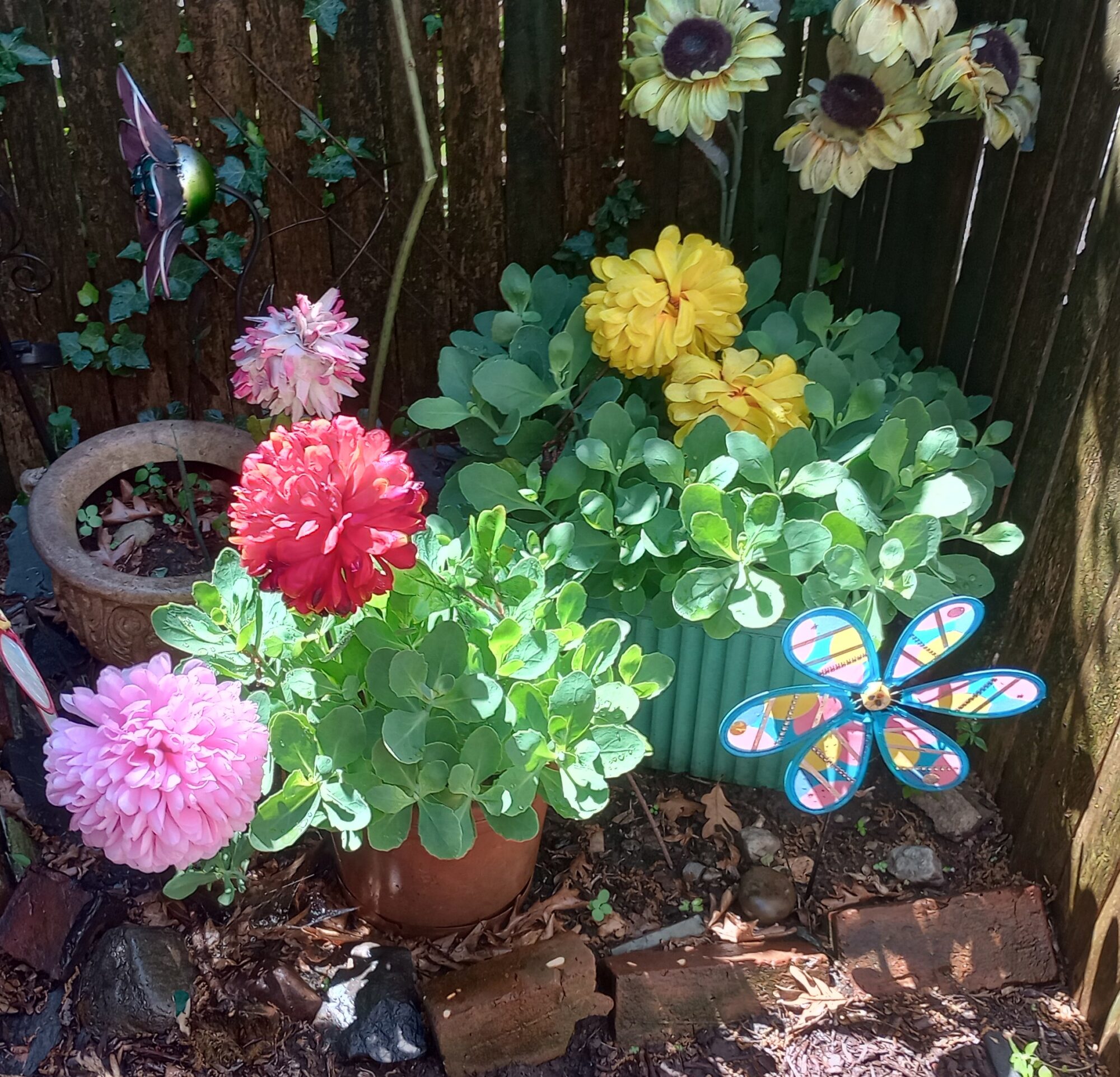
Those are my late mother-in-law’s live forevers. To be exact their botanical name is
Hylotelephium telephiumโbut they definitely weren’t ever called that in Brooklyn. Other
than calling them “live-fa-ev-uhs”, that whole Hylotella-ooh-gots-whatever thing had way
too many consonants for this neighborhood.
They were planted in the late 1970s in her “airy-way”โthat’s Greenpoint for areawayโby
Pete, the old Italian guy from down the block.
Not only did Pete have the Italian green-thumb touch, but he also had some really big
“tamaytas”โboth literally and figuratively.
The small, forgotten patch of dirt where he planted those live forevers sat directly in front of her house on McGuinness Boulevardโone of the busiest commercial corridors in North Brooklyn and, arguably, the street-soot-generating capital of the world. Even inside the house with the windows closed, you had to feather-dust the feather duster.
Not long after Pete’s wife passed away, we had a backyard Independence Day barbecue
where we filled a watermelon with vodkaโyet another classic back-in-the-day Greenpoint
tradition.
Pete, aware that we’d invited the two “mature bachelorette” neighborsโaffectionately
known as the ladies next doorโarrived with tamaytas in hand and marinated in an
unmistakable aura of Mennen Skin Bracer.
As the ladies enthusiastically requested, “Ooh, just a little sliver more, please”โthey continued their journey well past half-in-the-bag territoryโthat’s Greenpoint for drunk!
Old Pete responded with his best Don Ameche-style gentlemanly charm, pencil mustache
and all, and gladly provided the slicing serviceโeven helping remove the seeds.
Presumably so the sisters could increase their rate of consumption and accelerate their
descent deeper into the bag. But to the contrary at the end of the evening the galsโafter several more slivers, although a bit gigglyโremained perfectly coherent enjoying a cup of tea along with the cannoli and “svoo-ya-dell” pastries Pete had brought.
Pete’s evening, on the other hand unfortunately ended with me holding him under the arm
and steering him down McGuinness Boulevard just a few beats shy of him serenading the
neighborhood with a medley of Jerry Vale songs.
The next few years passed quickly.
Pete had died, then the sisters were gone, and sadly one day in the fall, Mom also passed away.
Right before the house was sold, each of the five siblings took a patch of the live forevers. It felt like a way to preserve a small piece of the life that had existed on the Boulevardโfrom a house where life always seemed to flourish, even when the world outside was anything but lush.
Most of us still lived in or around the neighborhood, so we knew the plants would be
“happy” staying close to home.
My wife, the eldest sibling, thought it might also be nice to bring one of them out to our
weekend house in the Poconos. Like a special retreat to live out the rest of their life in a
more natural environment.
There it sat in a decorative pot on the back porchโsurrounded by manicured grass, clean
air, and the crisp mountain breeze of Pennsylvania.
You could almost hear it cooing a contented “ahhh.” But if you listened closely, it was really screaming, “Hey! Get me the hell outta here!”
Less than a week later, we realized this Brooklyn-born-and-raised weed wanted absolutely
no part of that sanitized, suburban “more natural environment.” It started to die.
This wasn’t some carefully cultivated ornamental plant being misted with artisanal
rainwater. This was a weed that grew up in a patch of dirt made up of 40% cigarette butts. It adapted and thrived on brake dust, diesel exhaust, and the soot and scream of the BQE.
It needed to be back home in Greenpointโwhere it belonged.
Now, as I sit in my backyard just a few blocks from that patch of dirt on the Boulevardโ
watering my tamaytas and watching those live forevers thrive once againโI realize I’m a lot like that old weed.
I stood tough.
I adapted.
I survived difficult conditions.
Maybe that’s what belonging has always meant in America. People arrive from somewhere
else, put down roots in whatever patch of dirt they can find, adapt to impossible
conditions, and eventually call that place home. And just like Pete, and the sisters, and my mother-in-law, and the few others who stayed in Greenpoint, I discovered something.
We didn’t just survive here.
We flourished.
Because, just like that old weed, this is where we belong.
Joe “Kirsch” Curcio is a native and current resident of Greenpoint, Brooklyn. He spent 45 years in broadcasting and entertainment with ABC Radio/TV and National Public Radio. He has been called “the Garrison Keillor of the East River,” and the New York Daily News described him as “the thumbs and fingers erecting the virtual borough of Kings.” His work has reached nearly one-million viewers in combined streaming media, social platforms, and national and regional print publications.
Another point of interest: In 1976, Joe Kirsch took part in the Greenpoint bicentennial barge celebration. His 10-piece R&B band, “The Rhythm Express” were featured for two nights on the main stage on the piers of Greenpoint. The band later went on to sign a short lived contract with Emerald City Records, a subsidiary of Warner Atlantic records. Their “record”, “Wildflower” and “What A Difference a Day makes” was a favorite in the old juke boxes of the many bars in Greenpoint and Williamsburg.
