
Another primary election season is upon us!
Congresswoman Nydia Velázquez’s announcement last year that she would not seek reelection set off a scramble for power as a handful of challengers look to replace her in New York’s 7th congressional district.
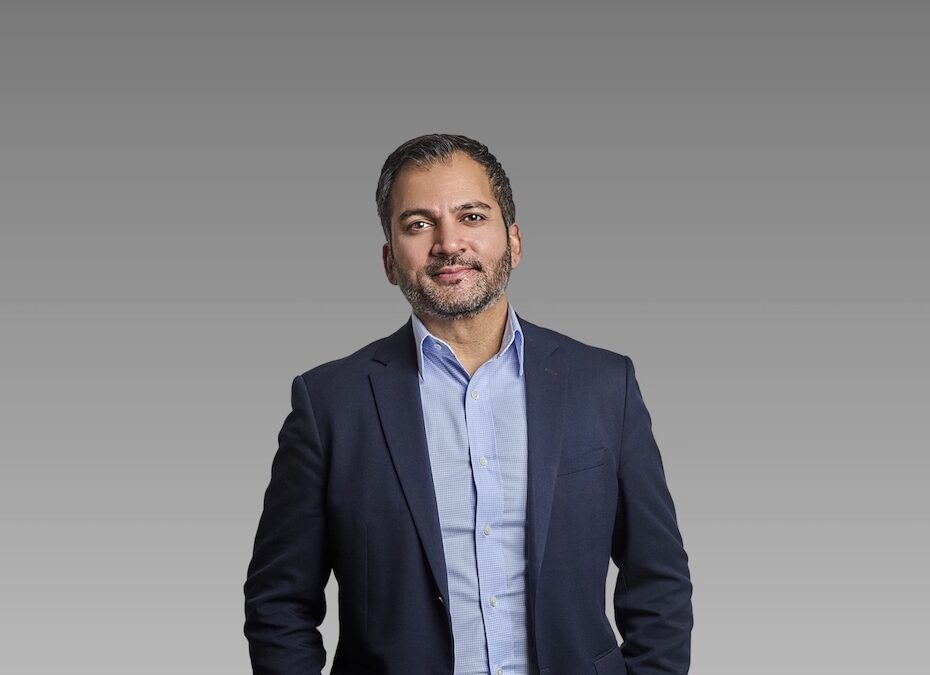
We’re interviewing four of those contenders—Vichal Kumar, Antonio Reynoso, Claire Valdez, and Julie Won. All four are running as progressive candidates. First in our interview series is Vichal Kumar, a public defender.
As a reminder, Greenpointers does not take money for political ads from any candidate, ensuring our independent coverage.
The primary election is June 23.
This interview has been lightly edited for clarity.
Could you tell us a little bit about you and your relationship to the district?
I’m a public defender, and that’s what I’ve been doing for the last 20 years in New York, working and defending families from deportation, from eviction, and really helping them navigate the broken systems that our government has to offer them. Not only have I done individual representation of thousands of New Yorkers at critical stages, I’ve also been a builder of creating new models of representation of care that we call holistic defense, the idea of helping community members stabilize their lives and also help meet their future goals, whether that is through accessing housing or healthcare or employment, but really letting them be the guides for their own story.
I went ahead and also built these models across the country over the past few years. I’ve been working in places they don’t really look like New York but with the idea that if you build something meaningful that can deliver impactful change, you can do it anywhere, and it’s been exciting to see that.
I grew up as the son of working class immigrants who had a convenience store my entire life, the store that I grew up stocking shelves in, making sandwiches, and meeting community and understanding what that meant and how a store wasn’t just a store but a community hub. And while I love my parents, they’re not the best business people, and they used to give out credit to every single community member that came in, because they could never turn down anybody in need, and that instilled this deep belief in me that we have the responsibility to take care of each other and take care of our communities, which is why I ended up choosing public defense as my profession.
Where in the district do you live?
I was born in Manhattan, and I’ve lived in Brooklyn in the Clinton Hill/Bed-Stuy area for about the last 22 years.
What are some of your proudest accomplishments on the job, and how do you think that would translate to holding public office?
I think my proudest accomplishments have always been the recognition that we can build solutions and systems in ways that government continues to fail, whether at micro or macro level determination.
For example, when I was at the Bronx Defenders, we saw that the community really needed access to tax services. Now, tax services are not particularly something that a public defender office offers, but it was a gaping hole in the South Bronx. And so me and a colleague of mine decided to get certified as tax preparers and get the office certified as a volunteer income taxes rep site. And that was something that, again, didn’t come from the community necessarily saying we needed it, but from us recognizing that it was just a simple gap. And that has kind of been the through line of my career as a public defender. It wasn’t just about the individual representation. But it was always about making sure that we identified gaps, and how it is that we were going to build them.
So whether it was getting the office certified as a tax site or building out a solitary confinement project, so that way individuals that were in isolated custody on Rikers weren’t left there without any protections or support. Or about building out a new civil defense practice or integrating different levels of services into what we offered—that was always the through line, to keep building and keep pushing and keep finding new ways that we could build solutions when really the systems and policies that were around communities were failing to deliver.
Obviously affordability is really at the forefront of this election and this district, which some have dubbed the “Commie Corridor” due to its support of progressive politicians. What does your vision of affordability look like for this district?
Affordability, it’s interesting that it is certainly a critical piece of this conversation today, but it’s also been a conversation for the last 20 years that I’ve been working with New Yorkers. New York has become more unaffordable, but it wasn’t doing so great even a couple decades ago. The conversation we were having about housing or a lack of access to a safety net or portable secure long term employment are the same conversations that are happening today.
And for me, it always starts with housing. Housing is the number one social determinant for health. Secure stable housing makes you 80% less likely to have access to the criminal legal system. It would make you much more likely to be able to maintain employment. When you live in transient housing or housing that is shelter or housing that is not permanent, we know, and I know from working with community members, that it can be hard to keep a job. It can be hard to find a place to get ready in order to even go to interviews. It can be hard not to have a consistent mailing address. So it has to start with housing.
And there’s certainly levers that we can pull from a federal level to incentivize the construction of public housing and affordable housing and repealing the Faircloth Amendment, for example.
But we can also do something really much more straightforward in expanding the opportunities for community members to get Section 8.
Section 8, which is a federally subsidized program, allows community members to get vouchers to rent apartments based upon their incomes and get a subsidy to do so. It’s the program that in New York for 20 years, people haven’t been able to access it. It’s not even the last 20 years, the wait list has only been open for a few weeks, let alone actually putting in a full application to get a voucher. And it’s kind of abhorrent that New York City of all cities, unlike any other cities across the country, has a program that can’t even be utilized. And by just driving resources to that program, we could immediately create opportunities for community members to get access to long term stable affordable housing without even having to wait for new construction or new zoning laws or new development projects.
Over the past few months, one of the biggest hot button issues coming out of Greenpoint and Williamsburg is the proposed Monitor Point project. It’s not necessarily a federal government issue, but still wanted to get your thoughts on the project, and whether or not that would be something you support.
Yeah, I saw the computing ideas about the Monitor project, and how it is that it influences the skyline, what’s the infrastructure going to look like to support this new construction, even conversations about the impact of bird migration and flight paths. And where I landed, it is a local issue. It is one the federal government can help subsidize in terms of funding if it falls under particular guidelines. But I think what’s important in the conversation was, who is the housing being built for? Like, we all know that there is a housing crisis in New York, and there has been one for a long time. And in some ways, every opportunity we get to build more housing is one that we should embrace, particularly as the demographics of neighborhoods are changing pretty rapidly.
And I saw the push to really secure a lot of permanent affordable housing as part of the Monitor project, and so I welcome the idea of having permanent affordable housing. As always, we want to see more and more. And with that company, the opportunity to ask developers to ensure that we have directed the green space that can also be utilized by community members. So ultimately, the opportunity to have more affordable housing is one that I would pay in favor of.
On that note, that project and so many others are in the shadow of the 2005 Greenpoint-Williamsburg waterfront rezoning, which irrevocably changed our neighborhood.
We have three Superfund sites, less open space access per capita than most neighborhoods in New York City, and a still unfinished Bushwick Inlet Park. How would you use this office to advocate for Greenpoint’s environmental needs?
I think that this is where the federal government can play an enormous part, especially when it comes to environmental needs. Two of the things that rise to the top of the conversation for me are, when it comes to Superfund sites—and that is something that is across the district, particularly in Greenpoint as well—the simple fact that we’re still way behind in getting anywhere close to getting these sites cleaned up and holding those responsible for the messes that they made and for the pollution that they have poured into our environment is something we have to prioritize. We need to get environmental spaces cleaned up. And that has to be a priority.
On top of that, we have to also think about what federal investment can mean in a dramatically changing environmental landscape. And it’s about ensuring that we’re using infrastructure to create environmental safety in our infrastructure. So making sure that we are recognizing that we have flood zones. So what does infrastructure look like to ensure that we don’t have rampant flooding around New York.
When Hurricane Ida happened, we saw flooding happening in areas—not necessarily in Greenpoint, but around the city and Queens in particular—that hadn’t been flooded before and people kind of been thinking about the dramatic environmental impact and changes that are coming for our communities, and federal investment can really drive infrastructure improvements and ensure that communities are protected while also creating economic opportunity for workers. And that type of investment is one that pays off, and we need to be prioritizing it right now.
Something we deal with a lot is business closures. How do you think we can better support our small businesses?
When it comes to small businesses, as I mentioned, it’s kind of in my DNA. It’s the way I grew up. My parents ran this convenience store, and I wish they’d run it better. But the conversation every month was about can we make rent, or do we invest a few dollars into stocking some more shelves? And that day-to-day conversation is what small businesses are managing. How is it that you can stay afloat in this environment, and still be able to deliver something that customers aren’t cheated by when you have costs, and you have rent, and you have the exploding costs of corporate conglomerations that are driving up your bottom line, and how do you keep those costs low?
I’ve met with a bunch of small business owners in the district. I’ve been spending a lot of time walking around Greenpoint popping into businesses and just having conversations with them and sharing my experience of what that would look like from a small business perspective, and the things that I’m hearing consistently are rent. Rent is the number one issue that people are talking about. The second is the G train shutdown causes a dramatic impact on weekend traffic and businesses’ bottom line. Not just the one we have coming in June and, but there’s also one coming in December. December! That’s like peak holiday season shopping for a lot of small businesses.
The fact that there hasn’t been any MTA push to make it happen, and I know that Lincoln Restler and Antonio Reynoso recently have been talking a lot about the G train closures, but this has been on the map for a while. And I don’t understand why it always takes something to have the community reach out to elected officials and be like, hey, this is a problem. Why wasn’t this seen from the first place? We should know this. I live off the G train and have had those honest conversations about when the G train is shut down so it’s a little bit harder to head a little bit north because shuttle buses are an inadequate replacement when the train isn’t working.
So we’ve got to think about what federal investment looks like for small businesses and while I would love to say that we could have commercial rent stabilization from a federal perspective, it’s not something that the federal government controls. It’s a hyperlocal issue.
And one of the big levers that the federal government can pull, though, is changing the tax code. Right now, our tax code incentivizes corporate landowners to leave commercial spaces open. They get tax write-offs. And therefore there’s no incentive for them to actually lower rent in places. And if we can fix that tax code and make it so that commercial properties can’t sit vacant for years on end, I think that would be a big boon to drive more small businesses and also support the small businesses that do exist right now.
What is a local business closure that really bummed you out, and what’s a new opening in the district that has you excited?
Yeah, so my answer for both is going to be the same actually. When Paulie Gee’s was closed and I was like, wait, is this closed for good? And then I saw that they’re like, no, we reopened like a full tavern now.
There’s a short closure, but it’s exciting to see it come right back immediately.
Yeah, I mean, I think to be fair, they always stressed that it was a temporary closure.
There’s one actual restaurant that I’ve known pretty much the entire time I’ve lived in Brooklyn and used to have two outposts. One was in Clinton Hill and one was in Williamsburg, called Meckleburg’s. Meckleburg’s had these fantastic chicken sandwiches that I loved.
And especially during the pandemic, it was a place where you could easily get groceries as well as food. And I really loved it. And they originally closed their Clinton Hill outpost in, I think, 2024, but then kept their Williamsburg one open, and then that one also closed. It’s like, oh, that was always a place I had gone to for so long, and I do miss that.
Anything else you want readers to know about you?
I’ve been in public defense for 20 years, and working on the front lines of protecting communities and protecting families in a time where our government continues to fail them. And the systems that I built were because of the simple fact that our policies don’t work for the people that need them the most. We don’t have healthcare. We don’t have housing. We don’t have continual opportunities to gain employment or even a social safety net that actually meets people’s needs.
And what I’ve done in that time isn’t just about mitigating the harm today, but about building solutions that will work for community members, that are driven by them, and that will ensure that they get both their voices heard, but also have their needs met.
And that’s where we’ve been with the through line of my work. And I decided to run for Congress because that’s the gap that we need to fill. You’re in court, or you’re in office, and you’re in different arenas working with community members, and you see that there’s always a ceiling as to how much that we can get done working from the outside. And until we change policies and systems themselves, we’re not going to be able to support people that need it the most.
I think I’ve demonstrated how it is that you can do that working outside the system, but it’s now time to be inside the system and actually make that change happen so people can get what they really deserve. People want to live a life of dignity and respect and have a government that is there for them, that supports them, but also is one doesn’t always have to be in their face every single day, which we have right now.
And in this environment where institutions and systems are being torn down on a regular basis, it really is the moment where we can really reimagine what they’re going to look like for people.
And that’s why I decided to run for Congress.
