
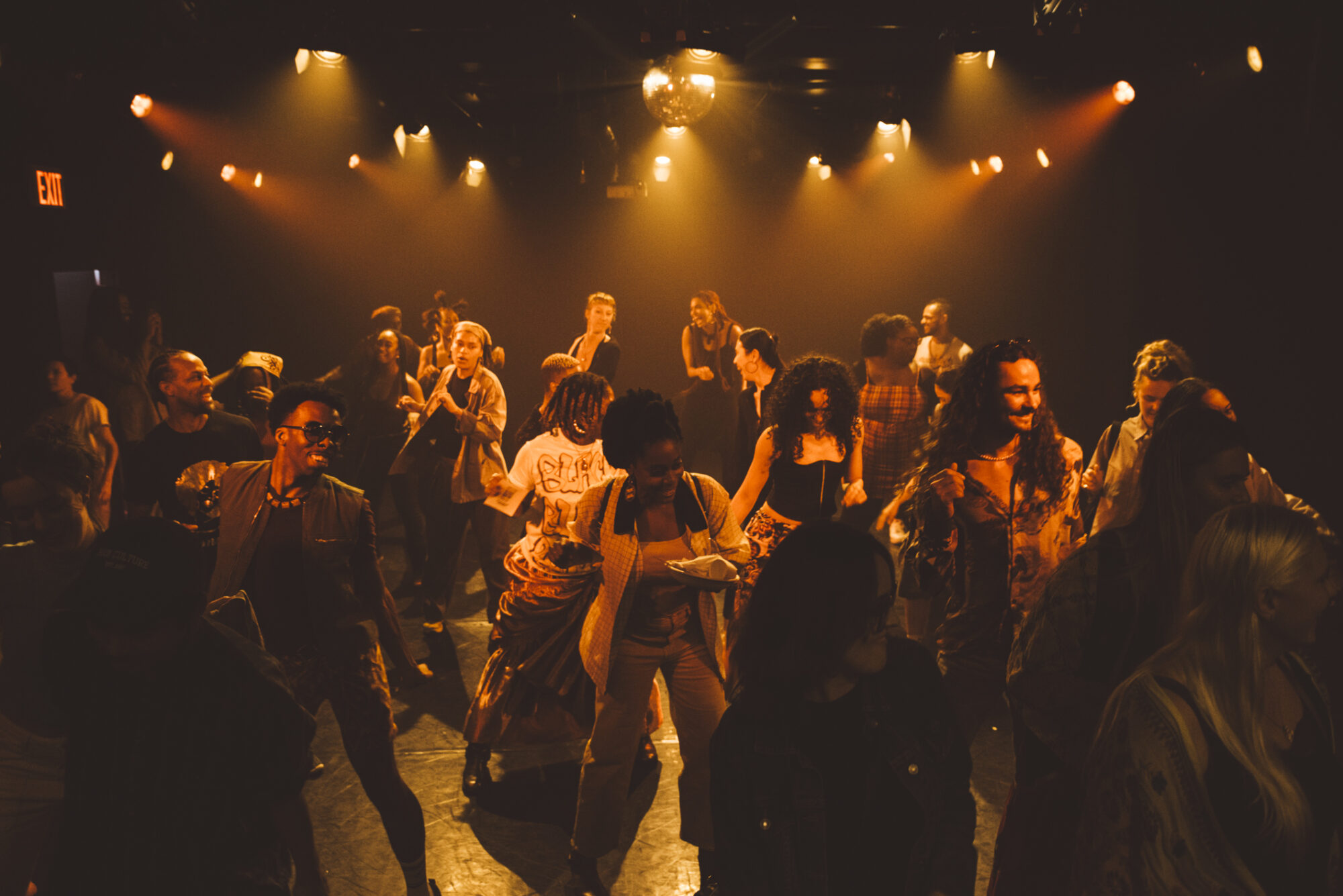

Triskelion Arts (106 Calyer St.) has activated the local arts scene for a quarter of a century, and now it’s here to serve for much longer.
As rents rise and arts organizations are often the first to suffer, Trisk has made the affirmative decision to stay put, cement its community ties, and provide resources to artists by purchasing its building.
In a March 6 announcement, the neighborhood dance and performance venue said that making the purchase was about “protection and possibility” for artists. In an interview with Greenpointers, Executive Director Rachel Mckinstry reflected exactly on that: on the importance of creative institutions being permanent homes, the power of self-advocacy in the face of change, and the need to “secure this space and protect what we’ve built.”
Greenpointers: Congrats on the purchase! Tell us a little about your history: how long have you been in Greenpoint, and at what point did you start considering purchasing?
Rachel Mckinstry: We’ve been in the neighborhood supporting dance artists and audiences since 2000.
Trisk started on North 11th Street in Williamsburg with a single studio and eventually expanded to include a theater. In 2013, we signed the lease for our current home at 106 Calyer Street in Greenpoint and renovated the building into four studios and an 80-seat black box theater.
We started seriously considering purchasing the building when we signed our lease extension in 2022, and the owner let us know he would likely put the building on the market during that lease. At that point, I negotiated a 60-day window to exercise our right of first refusal so we would have as much time as possible to match any offer on the building. I knew that owning our home would give us stability and power, and because we had already been operating as owners under the terms of our lease, I also knew that if we could raise the funds to purchase, it would be a logical and financially sustainable next step.

So much in the neighborhood has changed, with prices going up seemingly the only constant. What factors led to you deciding to be here permanently, and why?
Greenpoint is our home. Over the years, our community of dance artists and audiences has invested in this space financially, emotionally, and spiritually, and we’ve built deep relationships with our neighbors and community leaders. Moving didn’t feel right; our roots are here. We even have a theater ghost, Muriel, who protects us and keeps us on our toes, and she definitely wouldn’t have been able to come with us. So, we had to stay. That was the answer: buy the building.
106 Calyer Street is where Trisk lives, and as neighborhoods shift and change, it’s important that creative spaces like ours remain because we are a part of the cultural ecosystem that makes NYC so magical. Every time I thought about the future of Trisk, the answer kept coming back to the same thing: secure this space and protect what we’ve built. I wanted to guarantee that Trisk would always be able to protect creative freedom and self-expression.
And now, from here, our possibilities are endless.
Finances, especially in the arts, can be so murky and mysterious to navigate. To the extent you are comfortable, can you discuss what kind of financial planning or future models were needed to ensure this purchase?
To some, it felt like an impossible task, but not to me, and not to Trisk. I was determined to make it happen. We are incredibly lucky to have supporters, partners, and advisors who share our vision. We worked closely with them to structure something that balanced philanthropy, financing, and long-term sustainability. This acquisition was made possible by a community of people who believe in the importance of preserving creative spaces like Trisk in NYC, and we are forever grateful for their support.
Looking ahead, Trisk has spent the past 25 years operating year-round studios and performances that artists and audiences rely on, so ownership simply builds on our well-established model and allows us to plan more confidently for the future.

You have established yourself as a reliable rental space for performing artists and a venue for new works. How has your work or programming changed or evolved over your history?
Trisk has always had a “yes-and, let’s make it happen” spirit. We listen closely to what artists and audiences tell us they need and learn from each process, and that continues to shape how our programming grows.
Our current model is a studio-to-stage pathway that supports the different phases of the creative process. Artists often begin in our affordable rehearsal studios, developing new work, and test early ideas through Stage Dive, a monthly open-mic style performance where they can try material in front of an audience. From there, our presentation platform includes Split Bill, where artists explore new ideas within a shared evening. Our Residency Program provides yearlong support and resources for the creation and premiere of evening-length works. A core part of the residency is time in the theater early in the creative process, where residents collaborate with production, technical, and design teams to integrate lighting, sound, and staging into the work from the beginning.
Opportunities come through a mix of peer selection panels, guest curations, and curatorial partnerships. Alongside these pathways, we offer Office Hours where artists can receive guidance on grant writing, budgeting, contracts, and producing their work. Performances are open to audiences through sliding-scale ticketing to remain accessible to all.
Does the purchase mean any of your existing work will change or grow?
Over the past seven years, we’ve refined our programming into a platform rooted in radical care, and our focus now is on deepening the work and the pathways we’ve built. Owning the building gives us the stability to plan more boldly and invest further in the artists and audiences who make Trisk what it is. It allows us to continue growing a space where creativity can expand how we understand ourselves and one another.
What is something you wish artists or patrons or anyone knew about what it means to run an arts venue?
For me, running Trisk is magical. It’s an incredible honor to be a steward of a space where so many brilliant dance artists create and share their work. Every rehearsal, premiere, and audience experience is a reminder of why the space exists, and I feel lucky to be part of it.

Best of luck in this new, exciting chapter! Anything else you’d like to add?
Thank you for the love, Greenpointers! I learned a lot on this journey to acquisition, and the main takeaway: Nothing is impossible. Go for it!
While we anticipated most financial and logistical aspects of the building purchase, what I could not have predicted was the depth of personal, professional, and communal transformation it would catalyze.
When a project like this is underway, it demands full presence. Every detail, every document and every effort reviewed and reviewed again. There is no room to lose focus. That level of attention highlighted how the Trisk team works together. It revealed our collective discipline and trust. The staff stepped deeper into their roles, taking ownership of complex projects with confidence and grace. Shoutout to our Director of Operations & Marketing, Miriam Rose, and our Director of Production, Anna Wotring!
And now the work continues…so come see a show, bring your friends, and, if you can, donate to Trisk!
This is really such wonderful news. As an artist, those affordable rehearsal spaces are so critical. As an audience member, I have had many wonderful evenings watching FABULOUS performances. I absolutely recommend going to any Trisk programming.
Congratulations on the purchase of your building!! That’s wonderful news. for your organization and for the
Community!! Your future is limitless
Purchased the building? These artists must be loaded. The three most expensive buildings in the world are the Taj Mahal, Versailles Palace and any building in Greenpoint.
Honest question, do you ever contribute anything positive? You are such a wet sock. I bet you’re fun at parties.
I am actually the life of most parties. I just print the truth as somebody who has witnessed a lot in life and studied history. What is wrong with the post? A little humor. Greenpoint is super expensive. The only thing I hate in a democracy are the extremes which ruin it ie far left and far right extremists.