

Another primary election season is upon us!
Congresswoman Nydia Velรกzquezโs announcement last year that she would not seek reelection set off a scramble for power as a handful of challengers look to replace her in New Yorkโs 7th congressional district.
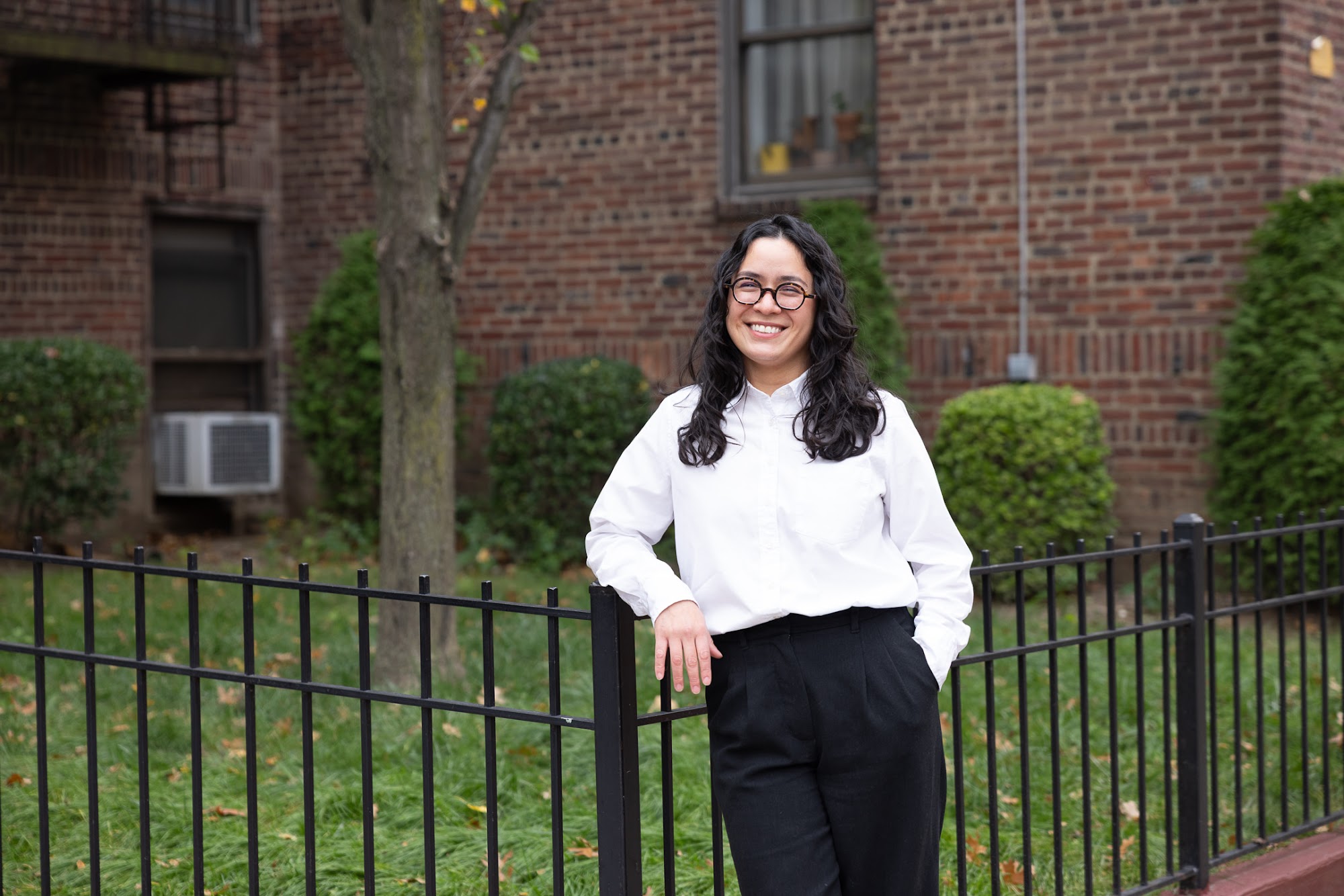
Weโre interviewing four of those contendersโVichal Kumar, Antonio Reynoso, Claire Valdez, and Julie Won. All four are running as progressive candidates. We recently spoke to Assembly Member Claire Valdez, who has the endorsement of Mayor Zohran Mamdani.
As a reminder, Greenpointers does not take money for political ads from any candidate, ensuring our independent coverage.
Read our most recent interview, with Reynoso here.
The primary election is June 23.
This interview has been lightly edited for clarity.
Tell us about you, and your relationship to this district.
I am a New York State Assembly Member representing a good part of the Queensโ side of NY-7: Long Island City, Sunnyside, Bushwick, Maspeth, and Ridgewood, which is also where I live. And before I was in the State Assembly, I was a member of UAW Local 2110 at Columbia University. And that was my kind of introduction to building collective power, to organizing together across all kinds of political differences for the things that we deserve as workersโgood wages, better working conditions, better healthcareโand really understanding the kind of solidarity that’s required to win those things. So I ran for assembly in 2024 to take the fight for local power to Albany, and it’s very much the thing that continues to animate this run for Congress.
At a moment when the federal administration is attacking not just workers’ rights, but immigrant rights, attacking our trans siblings, I think having people who know the power of solidarity and collective organizing go to Congress is a really essential way for us to fight back against the destruction of our democracy and basic rights.
What are some of your proudest accomplishments on the job?
We’ve been introducing a lot of legislation around unemployment insurance and expanding worker protections, particularly for people who have really precarious working conditions: adjunct workers, delivery workers, gig workers who are often not treated as full employees, either by their bosses or under the law. So giving them some more protections has been a really important part of our legislative portfolio.
Also, last year, when Mahmoud Khalil was kidnapped from his apartment building on Columbiaโs campus, I led the letter demanding his immediate release, demanding ICE to get off of Columbia’s campus. Alongside Council Member Alexa Avilรฉs, we got dozens of signatures from city, state, and federal elected officials to join us in that call. And I think in the same way that when I was organizing in my union and really there for my coworkers during really difficult grievance hearings and disciplinary meetings and all kinds of moments when they were under attack, I was there with Mahmoud at an incredibly difficult time for him and his family. And it was a really difficult political moment, I think, to be standing up. And I’m incredibly proud of that, and I’m very, very happy that he’s with his family, and we’re going to keep fighting to make sure he stays in New York City.

Obviously affordability is really at the forefront of this election and this district, which some have dubbed the โCommie Corridorโ due to its support of progressive politicians. What does your vision of affordability look like for this district?
Yeah, this is a really important question. You know, 77% of NY-7 is made up of tenants. It’s a district that’s made up of so much of people who rent our apartments. I myself am a tenant. And so I think tackling the housing crisis is so essential to tackling the affordability crisis, and taking a position that is ambitious with considering what the federal government can and has built in the past. I think really using every tool we have at the federal level to fully fund NYCHA around the district, to make the repairs that are necessary, to repeal the Faircloth Amendment so we can build more NYCHA housing and to develop as much social housing as possible.
To me, so much of the story of this district is immigrants and artists and workers and families made our homes here and built really beautiful communities here together, and private equity and real estate speculation has displaced so many of us. I’m really proud that I’m the only candidate in this race who hasn’t taken any money from real estate developers, precisely because so many of us have been forced out of our neighborhoods because of rising rents and development that prioritizes luxury apartments over deeply affordable ones.
So I think using the federal government to invest in deeply and permanently affordable housing and advancing rent control so people who live in the apartments that we have now and love them can stay there, too. So I think tackling the housing crisis is really at the forefront of tackling the affordability crisis in this district.
One of the more hot button issues lately in Greenpoint and Williamsburg has been the Monitor Point project. It’s a city government issue, not necessarily a federal one, but still curious to get your thoughts on the project and whether that would be something that you’d support.
I understand the pain and frustration of residents who are seeing development happen in a place where for many, many, many years activists and residents have been fighting for green space, for the Bushwick Inlet Park to be completed. It’s really exciting to see Motiva is open now. But there’s so much more to be done to make sure that that project is made whole and that access to the waterfront and green space is available.
When thinking about housing policy, especially at the federal level, we really do want to be thinking about what kind of housing we’re building, and for who? And so that’s why I’m really excited about social housing and decommodified housing that the federal government can really advance as an alternative to real estate industry building developments that make them a lot of money but are unaffordable or out of reach for average working people. Making sure that the housing we’re building is affordable for the long haul, and that it isn’t built for the private market to sustain itself, that the federal government can act in that.
That project and so many others are in the shadow of the 2005 Greenpoint-Williamsburg waterfront rezoning, which irrevocably changed our neighborhood.
We have three Superfund sites, less open space access per capita than most neighborhoods in New York City, and a still unfinished Bushwick Inlet Park. How would you use this office to advocate for Greenpointโs environmental needs?
Throughout this campaign, I’ve been really moved and excited to meet so many activists who are building deep community around these issues and really taking on the corporate polluters who created the mess in Newtown Creek, who are responsible for the really deep and longstanding environmental degradation of Greenpoint and really inspired by people like Bronwyn [Breitner] who’s been leading on making McGuinness Boulevard safe, Chris [Roberti], who leads the bike busโI got to ride on the bike bus last weekend. It was really just joyful to see Greenpointers come together, build community, take back public space and advance a vision of Greenpoint that is green and habitable and beautiful. And the work that I want to do in Congress is directly to support the local activism on the ground and to help take on the corporate polluters that are responsible for so much of the degradation.
We have to remediate Newtown Creek. We have to make it a space that’s beautiful, that’s accessible for Greenpointers because there is so little public space and green space in Greenpoint. And we’ve been working on the Queens side to take on local polluters, like Green Asphalt, that are causing all kinds of air quality issues and noxious odors that I know so many people in Greenpoint have been experiencing for far, far too long. And that’s the kind of work that I want to keep doing in Congress, too, making sure that polluters are paying, thinking about how we can be creative with community block grants to fund the local projects that are happening on the ground and support that work and making sure that the EPA is continuing the work to clean up Newtown Creek. I think it’s really essential that that project moves forward.
Over the past few years, weโve seen so many small business closures. How can we better help small businesses?
I mean, one of the big frustrations certainly in Greenpoint that I’ve experienced that I know so many others have as well is the shutdown of the G train over the weekend. I think that’s definitely hurting foot traffic to part of the district [where] that’s the main way to get to and from Greenpoint. I think the federal government has a big role to play in making sure we’re funding our transit projects so they’re finished very quickly, so there are as few disruptions as possible.
My colleague Assembly Member Emily Gallagher carries a commercial rent stabilization bill at the state level. I think we should talking about commercial rent stabilization at the federal level, too. Rent going up is such an issue for so many small business owners. In our climate platform, we also talk about the rise in costs of utilities that are also a huge factor for a lot of businesses staying open or not staying open. So I think there’s a role for the federal government to play in advancing commercial rent stabilization, in tackling utility costs, and then just making sure that people can actually come to the neighborhood in a way that’s much easier. So I think those are the things I would say for just keeping businesses open and making sure that they have the foot traffic that they need to sustain themselves.
What is a local business closure that really bummed you out, and whatโs a new opening in the district that has you excited?
I’m really excited about the opening of Three Decker Diner (695 Manhattan Ave.), which I know just reopened.
Saint Vitus (1120 Manhattan Ave.) closing, I think, was so heartbreaking for so many people. Music venues and art venues in Greenpoint have been closing for a long time. I come from an arts background. I moved to New York because I wanted to pursue a career in the arts. And like so many other artists who did that or who were born here, itโs just so expensive to make art and be a performer in New York City and seeing spaces that have nurtured new talents and built community close is also just really heartbreaking.
Anything else you want readers to know about you?
I come to this work not just as a union organizer, but as somebody who wanted to be an artist when I moved here, and I know thatโs an experience shared by so many people who live in Greenpoint and around NY-7. And seeing music venues and art galleries and spaces where the creative community has really thrived close is really devastating, and it’s something that we can absolutely fight back against when we organize together. And it’s something that I actually want to do if Iโm elected to Congress.
